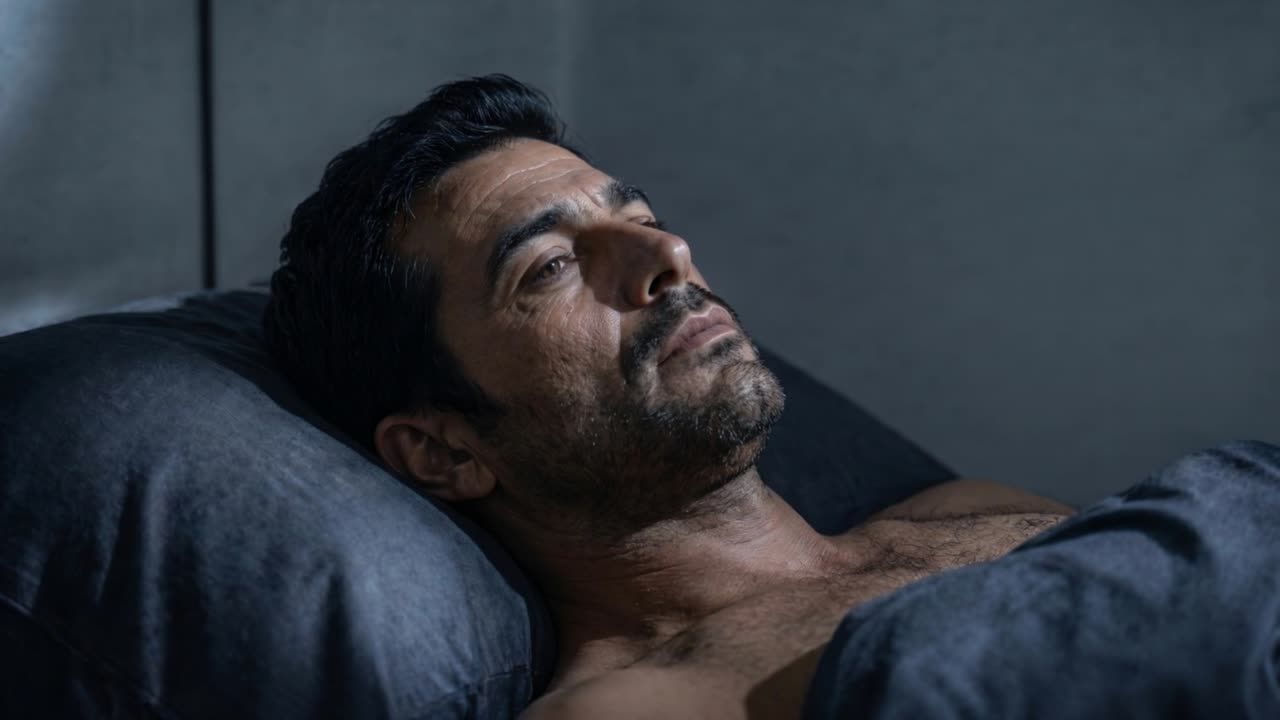
This short film is not a story about returning to a childhood home, but about a person returning to himself. Through Antoine’s story, we want to portray the inner emptiness that can emerge even when someone achieves everything they once aspired to. Money, status, success, and external prosperity do not guarantee inner fulfillment. Sometimes, in the pursuit of becoming who they are expected to be, a person gradually loses connection with who they truly were. At the core of the film lies the theme of losing one’s sensitivity to life. In his youth, Antoine leaves his hometown not out of rebellion or resentment. His departure is a quiet internal decision — an attempt to prove to himself and to his father that he is capable of more. His father sincerely wants a better future for him, but expresses it through pressure, control, and rigid ideas of what a “successful life” should look like. Antoine accepts these expectations and builds the life that was envisioned for him. Years later, he becomes a successful man, yet emotionally exhausted and internally empty. He lives within the relentless rhythm of a big city, surrounded by comfort and people, but no longer feels closeness, warmth, or genuine presence in his own life. The film explores the emotional alienation of modern life. The protagonist exists almost mechanically: repetitive days, a cold apartment, endless phone calls, constant obligations. Visually, this is emphasized through the contrast between two worlds. Antoine’s Paris is cold, geometric, metallic, and nearly sterile. His childhood home is warm, quiet, filled with air, light, and memory. At the same time, the film does not romanticize the past or suggest that happiness can only exist “back home” or in the countryside. The central idea is different: a person loses themselves not when they leave, but when they stop feeling. Antoine’s return to his childhood home becomes not a plot device, but an emotional journey into memory and sensation. The film avoids direct flashbacks. Instead, the past emerges through fragments of feeling: morning light in the kitchen, the sound of footsteps, the texture of bakery paper, the silence of a room, the touch of a wall. We want the audience not simply to observe Antoine’s memories, but to recognize their own emotions and experiences within them. Through these details, the film speaks about the simple things people often begin to value only after they are gone: quiet mornings, the presence of loved ones, a sense of safety, and the ability to truly exist in a moment. Time plays a crucial role in the story. Antoine arrives too late — his father is no longer there. This is never stated directly, because the film avoids overt dramatization. Instead of emotional outbursts, the narrative is built through silence, pauses, and internal experience. The letter Antoine discovers becomes a symbol of an unfinished return and a missed opportunity. It is the moment when he confronts not his success, but his loss. Yet the film is not about guilt. It is about acceptance, and about realizing how far a person can drift away from themselves without even noticing it. The final encounter between Antoine and his younger self transforms the story from a grounded drama into something more poetic and universal. The boy in the house is neither a ghost nor a fantasy. He represents the part of Antoine that has remained within him all along. His words — “You took a long time. But you came back.” — become the emotional culmination of the film. This moment is not about physically returning to a village, but about rediscovering the ability to feel, to remember, and to be fully alive within one’s own existence. We want the film to leave behind not a feeling of tragedy, but a quiet emotional aftertaste. The ending remains open: Antoine does not receive definitive answers, nor does he instantly transform his life. But the audience understands that something essential has shifted within him. For the first time in many years, he no longer feels lost. Through this, the film speaks about hope — about the possibility of reconnecting with oneself, even after years of emotional disconnection. The central theme of the film is that home is not a physical place, but a state in which a person once felt authentic and alive. By returning to that state, Antoine does not reclaim the past — he regains his sensitivity to life. And through that, he finally begins to understand where to go next. https://app.tapnow.ai/creator/profile/2692ae18-d01a-49e3-b57b-f0aeeb15b0fa